
High above the sea, nestled into the lush eastern hillsides of Bali, and far away from Ubud, I found myself in the ancient village of Tenganan. The air was thick with the scent of rain; a soft drizzle still hung in the atmosphere, as the puddles of water on the muddy path reflected the half-clear sky. A few locals were about, doing their chores as if we were transparent spectators peering into an ancient way of life. At the village’s entrance, a quaint museum offered a few details about Tenganan Village, nestled beside a small parking area where a few scooters lay scattered, beads of rain shimmering on their seats.
Drawn by the pulse of curiosity, we ventured towards a small workshop that seemed to grow out of the earth itself. Made primarily of wood, its structure was humble yet profoundly intricate, almost swallowed by the creeping vines and lush ferns that draped over its edges, lending it a wild, almost mystical quality.
Inside, the air buzzed with the rhythmic sounds of industry. A couple of workmen were engrossed in carving out an elaborate doorway, their hands moving with the confident grace of the seasoned craftsman. Deeper into the shadowy interior, behind a veil of soft, hanging sarongs that fluttered slightly with every movement, women sat cross-legged, their fingers dancing through fabric and thread. The colours of their sarongs—a vibrant pattern, unfolding in real-time—told stories in every shade of colour, each piece a testament to the rich, unbroken heritage of Tenganan.
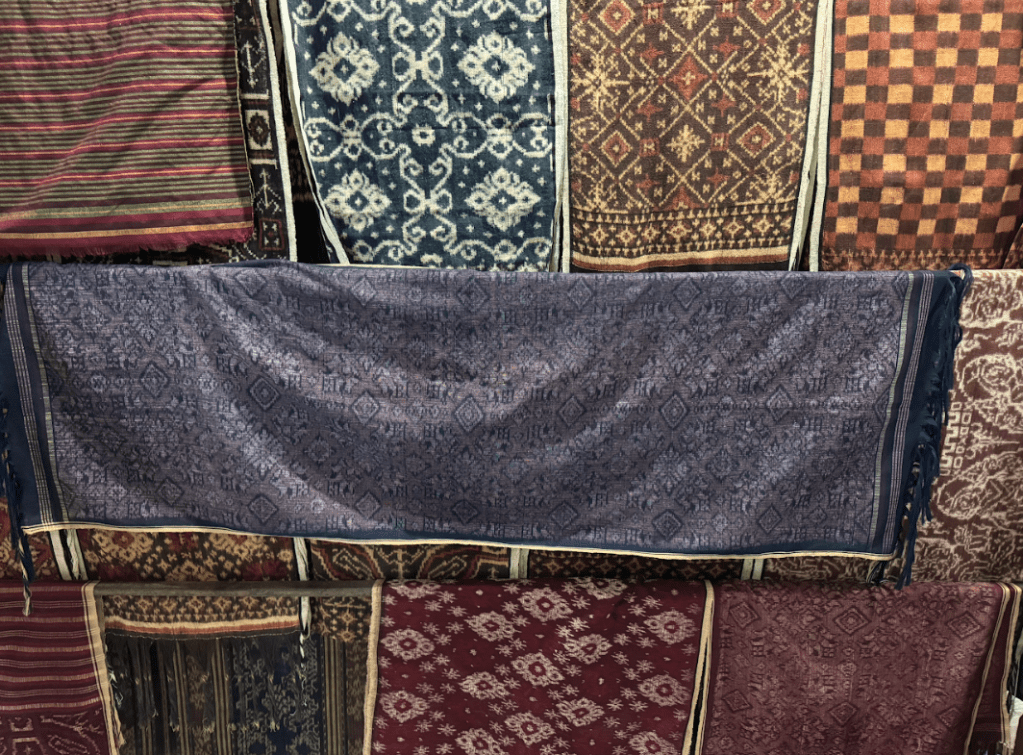
We introduced ourselves to the women, who seemed engrossed in their work, hardly looking up as we entered. Their past creations adorned the walls, a silent testament to their expertise in weaving intricate patterns that told tales of Tenganan’s history and spirituality. They required not to boast; the walls themselves were a vibrant display of their achievements.
My dad was drawn to the rhythm of their work, examining the textiles with a discerning eye. The collection was a mix of new, synthetic fabrics and ancient, traditional ones, some even adorned with motifs that seemed to whisper old, mysterious stories that might unsettle a less curious visitor. We tried on several stunning double ikat textiles, marvelling at the craftsmanship and the vivid colours that seemed to come alive against our skin.
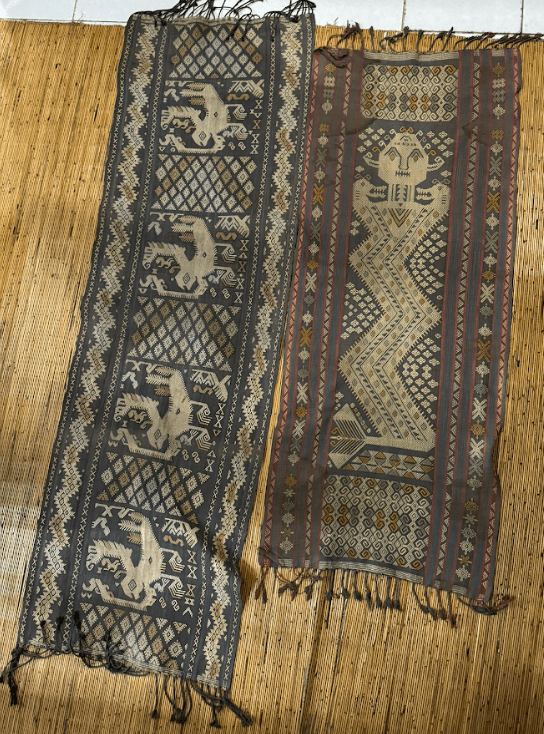
As we contemplated purchasing a piece, the typical bargaining dance began. My dad, ever the negotiator, engaged with the village’s prime weaver. After a spirited exchange, he managed to secure a deal, reducing the price from 10 million to 7 million rupiah, with two free sarongs thrown into the bargain. The weaver, clearly impressed with his bargaining prowess, laughed at his playful jest about marriage, a typical action from him, reflecting his jovial but often delusional charm.

Proudly, we carried our purchases along the muddy path, dodging puddles. I teased about dropping the precious sarong in the mud, which only earned a stern look from my dad. Our laughter mingled with the shouts of local children playing badminton, a scene so inviting that we couldn’t help but join in. Wayang, our guide, displayed some impressive badminton skills, but the village children, agile and quick, matched every move, their laughter echoing through the cooling air.

As the game drew to a close and dusk began to settle, we took our leave, exploring the final corners of this timeless village. The light rain began to fall again as we made our way back to the car, the droplets gently reminding us of the enduring, serene pulse of village life in Tenganan. The drive back was quiet, contemplative, each of us lost in thought, the soft patter of rain a perfect epilogue to our day’s adventure.
 Rich&Will's Exp Travel
Leave a comment