
Scotland – William, England
Rosslyn chapel
Discover Rosslyn chapel’s surprising interpretation of Virtue and Sin.
After climbing the last few mountains of the Highlands, we travelled south down to Rosslyn chapel. According to dark, unexpected and shocking legend, the body of Christ was secretly buried underneath the church. Although you might think that this church mainly worships the Christian God, it surprisingly venerates the pagan figure of the Green Man.
Inside the Church, hidden in plain sight, two striking pillars stood up, darted up to the ceiling morphing into intertwining supports. The pillars each had a unique design to them, although to be quite frank, one was far superior in design than the other. The hidden story behind these two pillars is called “The apprentice pillar”.
“Rosslyn’s master mason, having received instructions from his patron as to the design of an exquisite pillar, was hesitant to carry out the work until he had been to Rome for inspiration. While he was away, an apprentice, having seen the finished pillar in a dream, set about the work. When the master mason returned he was so jealous of his apprentice’s achievement that he murdered the young man in a fit of rage.”

A story of murder and jealously as a foundation of the church, this rather punny metaphor is strangely coincidental, as of many other things in this church. As my eyes followed up to the roof, I rimmed around the edges, checking for details; I discovered a few faces scattered around the edges of the walls. One of them was supposedly the carved face of the mason, cursed to stare at the pillar that out-performed his work for the rest eternity.
The lack of light in the church made me feel like I was in some sort of emotional void, forcing its own. Another peculiar thing about this church is the tablets showing Seven Deadly Sins and Seven Acts of Mercy. But instead of having the expected arrangement of good and bad: pride, greed, anger, envy, lust, gluttony, sloth; and the acts of mercy: feeding the hungry, giving water to thirsty e.t.c. Whoever owned or was in charge of the church at the time decided to swap greed with giving water to the thirsty (charity). This might be the reminder of the lurking sin within everyone unexpecting, but I think there is a much deeper meaning than this simple explanation.

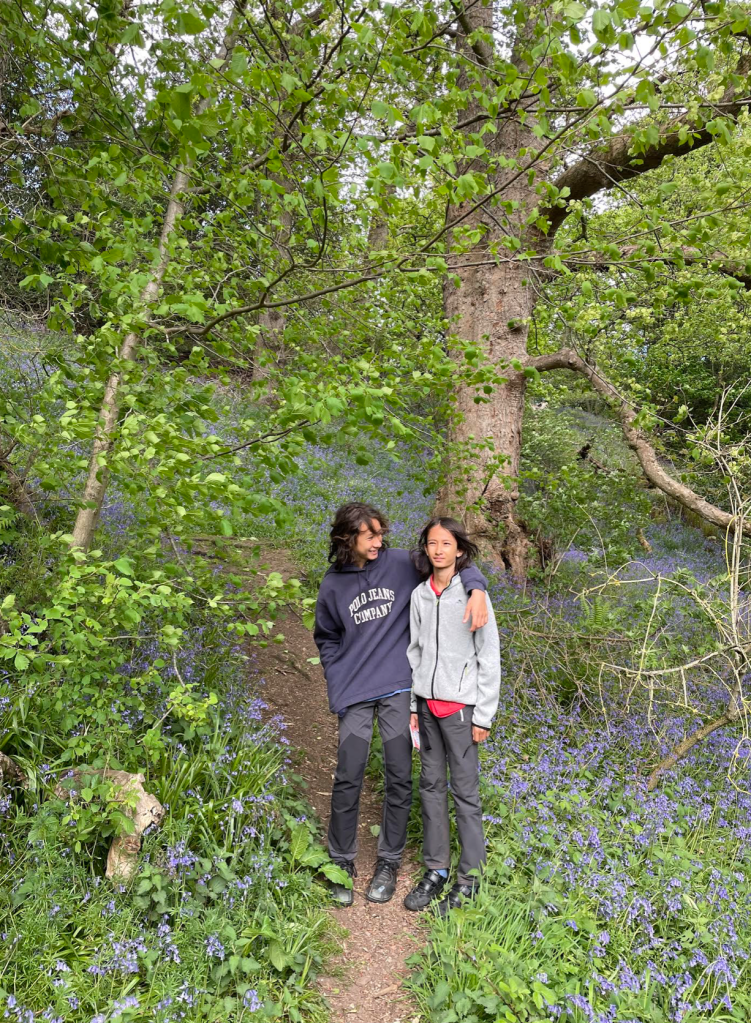
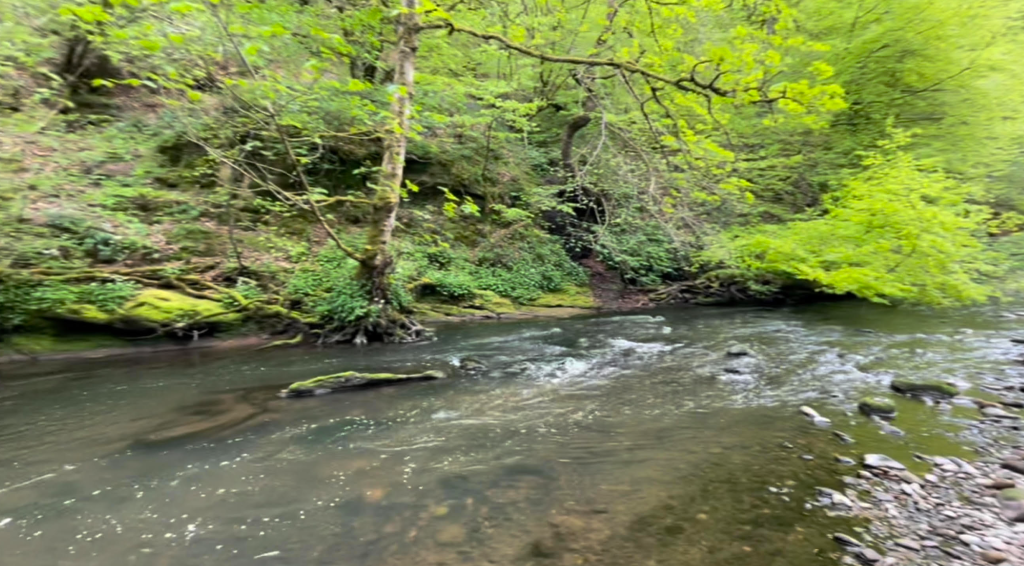
After the intense insight into the depth of the church, escaping the chapel was definitely necessary. We walked around the gardens and eventually found a gate that led to a vast dense forest, Roslin Glen. The forest seemed absolutely pristine, with brown leaves perfectly evened across the forest bed. We walked down a loose slope which revealed a smooth river silently flowing down the path. The trees hung over intricately jagged rocks, if it were not for the harsh indifference of the cold, I would’ve jumped straight into the inner-peace of the river.
Holy Island
Where the Vikings raids started
Across the border we went, there was somehow a sudden change in atmosphere; the sky cleared, damp mud became sprinkles of grass, the seemingly endless expanse of clouds started to clear up; this was a great relief to the harsh but divine landscape of Scotland. Since we were now driving down the east coast of England, we decided to visit Holy Island since it was nearby. After learning about the ravaged Viking history of the Island, I felt the presence of the past Vikings taunting us in their spiritual form.
While visiting the Holy Island of Lindisfarne, it is extremely important to pay attention to the tides. Each day, the sea cuts off the island from the mainland. While driving across the road, we realised that the road was basically just on loose sand which was pretty dangerous. Although from far away, it looks like a normal road, it will be quickly submerged when the tide rises again, the road wouldn’t even be there anymore!
Driving past the sandy crossway, it suddenly felt like we’ve arrived at a different culture of people. The fact that it was connected to England felt strange, they had nothing in common. The streets around the place are completely car free, which boosts the feeling of village life. After pottering around for a bit, we finally made our way towards the Castle, the castle built upon an ancient volcano really makes it rather imposing. Historically, the island had a long history of raids with the vikings, after many bloody battles they finally plundered and destroyed many historic abbeys and castles. This island was the main magnet for Viking Raiders.

After looking around at more interesting buildings and areas, we decided to drive back to the mainland so that we were not trapped within the island. We visited an inn which would have served us food if it had not been just a bit too late for dinner. Instead, we cooked our own pasta and ended the day in a relaxed fashion.
Rievaulx Abbey
How did Monks of the past live together?
After having loads of fun with some of my dad’s friends in Derbyshire, we head on towards Rievaulx Abbey.
The scenery around me started to become much more recognisable as an ‘English landscape’. The bright wavy hills flashed back, full of sunlight, on a bright spring day. While driving on towards our final destination, we stopped at an English Heritage sight – Rievaulx Abbey.

Although the Abbey was heavily damaged by the Dissolution of the Monasteries, the overall structure is still intact. The main part of the building is surprisingly elevated, considering it was built in the 12th century. Multiple exposed stone stairways twirl up to the top of the imaginary roof. While standing right inside the ruins, looking through the skeletal structure of the area, with the sun shining straight through, casting great shadows onto the grass, I am given a great overview of the movement of the monks many centuries ago. The transparent property of the place increases my sense of imagination and freedom throughout the whole area. It is as if my soul was freely passing through the walls of the bustling abbey in the 12th century.

A miniature museum next to the abbey shows the activities of the monks who once lived there. I overheard a conversation between what I assumed to be a historian explaining the meaning of an engraved stone tablet “Here shows a short, cute narrative of what seems to be a bunch of monks and maybe volunteers slowly building an archway of a door bit by bit…”. One of the main storylines which is brought out by the Museum is the drastic effect that the dissolution of the monasteries made on the structure and overall life in the abbey. Other artefacts included shattered pieces of stained glass rearranged to the original design many centuries ago. It also included intricate stone decorations for the pillars of the church which were broken off by the damage caused by Henry VIII.
Back in the ruins, we explored the place in which monks, every morning, would gather around stone steps and discuss the future prospects of the abbey, and also discuss the latest philosophical book they’ve just read. Although much of the atmosphere has been stolen away by the centuries of destruction and weathering, I found my mind restless, the place really triggered my connection to the past.
Only now do I realise that all three venues that I’ve currently visited all are Churches which have been damaged in some sort of way: Rosslyn Chapel, slightly damaged by the protestant reformation; Lindisfarne, damaged by the Viking raiders; and finally Rievaulx abbey, heavily damaged by the dissolution of the monasteries. It is about time to take a break from harsh history and back down from the east coast and head towards Chichester.
Kingley vale
The trees which never die.
After finally reaching the end of our Odyssey of Britain, we still had one last place to visit before we bid the island farewell – Chichester. Southern England contrasts heavily with the North of England, much more built-up, civilised, populous, and people actually have the concept of the sun, instead of just staring at you in curious bewilderment when mentioning it. After meeting up with our lovely relatives living in Chichester, we went on our jolly way to Kingley Vale.
Kingley vale, famous for its yew trees, is one England’s most important historical sites. You are firstly greeted by a short walk through pasture land with sparse trees leaning over the path, to shade you from the sun. Upon reaching the yew forest, we passed a gate and entered a small hut which explained the historic value of the forest. It also described how the massive old yew trees actually hollow out, but don’t actually die… although the inside of the trunk does actually rot, the branches stemming out from the original trunk grabs hold of the ground once again and grows roots to continue supplying nitrogen and other important nutrients for the tree, which in turn preserves the hollowed out tree trunk.

Entering the yew forest, the gnarled roots and branches warped my vision around them, it felt like a fever dream constantly flowing at the slowest pace possible. The endless branches and roots made it hard to navigate, although we were told that it was a circular path, so no matter which branch we went off, we would always rejoin back onto the main path. After crawling through the underground tunnel of strangling roots and branches, we rejoined onto the main path and saw a flight of stairs darting up onto the top of the hill. After racing all the way to the top, we reached the devil’s humps.

The Saxon made humps which were sticking out from the rest of the forest, easily spotted from far away. There are four mounds running from southwest to northeast. The humps are spaiously separated with around 5 metres between them. They still stand rather tall at around 4 metres even with the damage caused by early explorations. These rather mythic humps are believed to date back into the late Neolithic period. On the information pad, it said that one of the Barrow was opened up to undercover the secrets of the hump. It was clear that it had been disturbed previously, although there were still a few artefacts recovered; there were burnt bones mixed in with burnt soil, a tooth of a horse and a few fragments of Iron Age pottery.
After taking a few photos on top of the humps, we made our way down the hill. We took a detour through the thick forest, in which there were mainly yew trees in every direction, although there were some other species here and there.
After a long journey back down to civilisation, this was one of the last venues we would visit before the new journey to the new soil of France.
 Rich&Will's Exp Travel
Leave a comment